Charles Greene and the Houdini Treasure Hiding in Plain Sight

Charles Greene and the Houdini Treasure Hiding in Plain Sight
Every collector dreams of the moment when a cardboard box becomes a time machine.
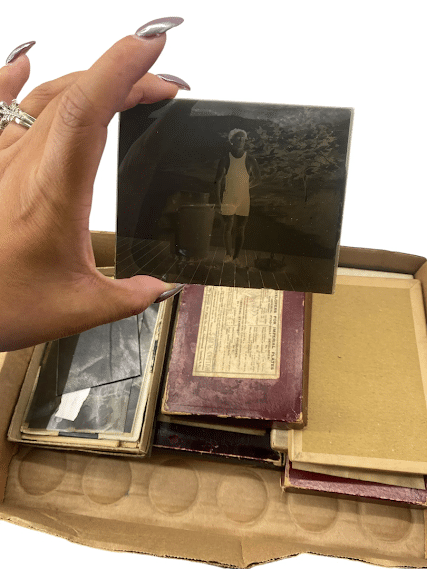
For magician, historian, and collector Charles Greene, that moment came in an Ohio auction house, under ordinary fluorescent light, with two lots of glass plate negatives connected to Harry Houdini. The listing was vague enough to be a gamble: maybe nothing, maybe something. Greene knew only one way to find out. He flew from Washington, D.C. to Columbus, rented a car, and went to see the plates himself.
What he found was the kind of discovery magic history lives for.
The negatives had surfaced through Apple Tree, a company known for handling abandoned safe-deposit material. They were more than 100 years old, stored in aging boxes with handwritten labels, some peeling, some layered over older labels. But the images themselves had been protected from light. As Greene lifted the glass plates and studied them, one by one, he realized he was looking at Houdini photographs he had never seen before.
Not merely variations. Not copies. Lost images.
Some connected to famous Houdini moments and figures, including iconic material involving Kellar. Others appeared unfamiliar even to seasoned collectors. Greene had done what collectors always say matters most: he showed up. In his telling, the discovery was part luck, part instinct, and part old-fashioned hustle.
That same instinct runs through Greene’s life in magic. As a boy, he haunted Tannen’s Magic in New York, 17 floors above Times Square, then found his way to the Governor’s Restaurant, where close-up legends gathered every Saturday. He built shows, worked birthday parties, restaurants, trade shows, and corporate events, eventually traveling the world as a magician. Along the way, he became a collector of posters, props, stories, and the overlooked paper trail of conjuring history.
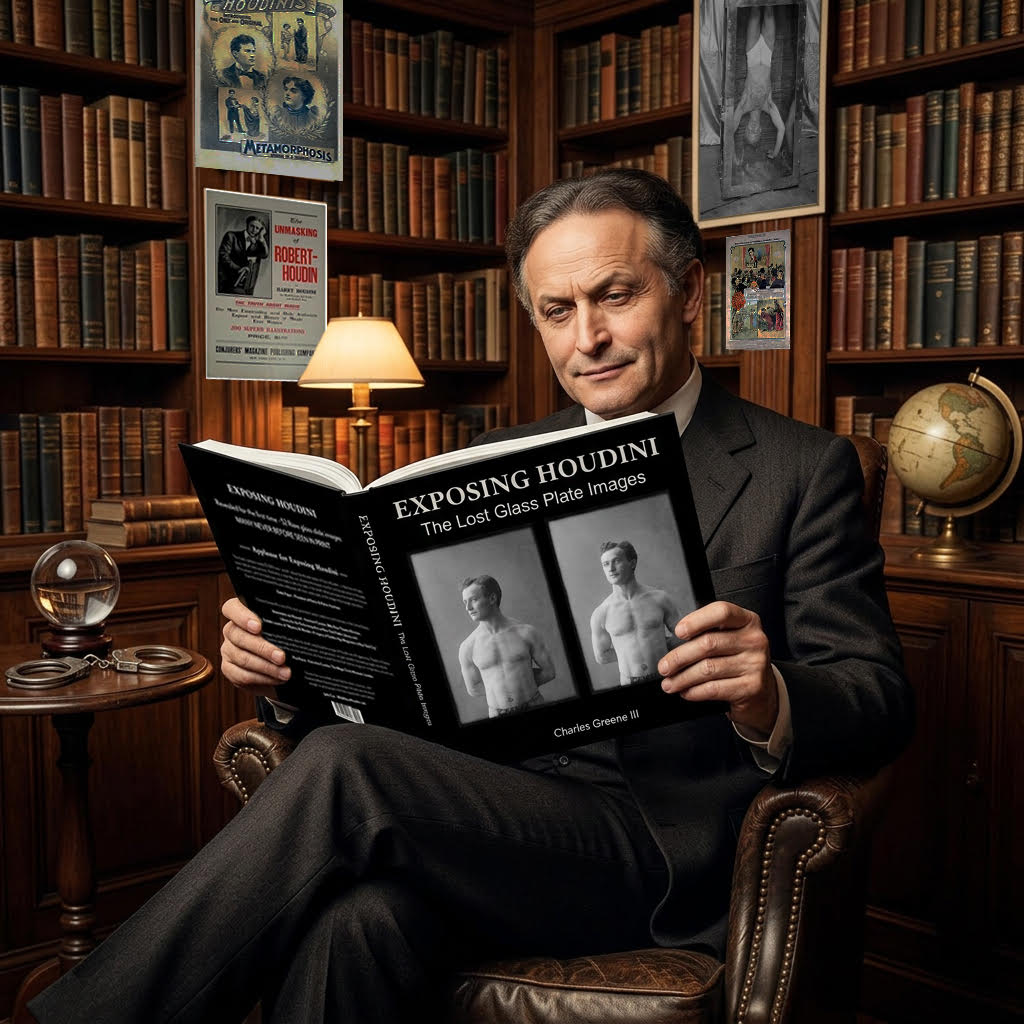
The Houdini negatives became something more than a private prize. Greene believes in sharing discoveries, not locking them away. His new book, Exposing Houdini, brings these recovered images into view, pairing the thrill of the find with the care of a historian who understands that magic’s past survives only when someone bothers to preserve it.
The story even has a Parisian flourish. Greene launched the book in Paris, where he regularly returns, drawn by markets, archives, friendships, and the pleasure of looking for treasure where others see clutter. That habit of searching, patiently and with curiosity, is what led him to the Houdini plates in the first place.
Exposing Houdini is not just a book of rare images. It is a reminder that history is still out there, waiting in boxes, auctions, collections, and forgotten corners.
In the end, Greene’s discovery proves that Houdini is still escaping us: slipping out of locked boxes, sealed vaults, and forgotten negatives, waiting for the right magician to bring him back onto the stage.
More information: exposinghoudini.com